SATELLITES
Launchable 4U CubeSat
A 4U launchable CubeSat designed for Low Earth Orbit (LEO) operation.
Project Overview
The 4U CubeSat was a collaborative project between King Fahd University of Petroleum and Minerals (KFUPM) and the Saudi Space Agency (SSA) and is scheduled to be launched in the coming years and operate in Low Earth Orbit (LEO). The payload is relatively typical, consisting of an ESP32 microcontroller, several sensors, and a custom-designed PCB.
My Contribution
After AstroArabia team at KFUPM finalized their design and manufactured the 4U CubeSat, the manufacturer introduced several major structural errors, including misalignment of the frame. I was called in to assist, and I successfully corrected the structural issues and secured the frame using rivets.
CanSat (The MultiSat)
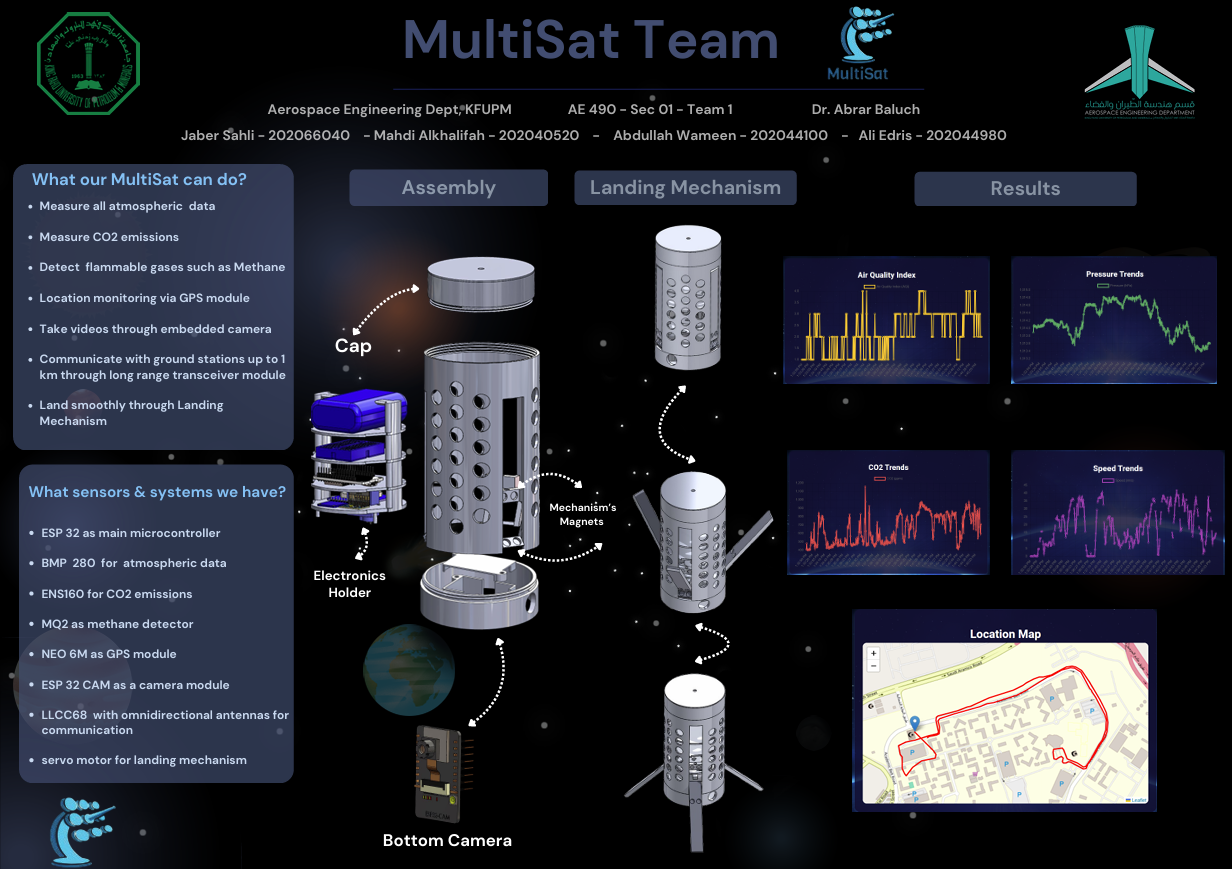
A launchable CanSat designed to collect atmospheric data
Project Overview
Despite its small size, the MultiSat can measure most of the important and relevant atmospheric parameters, including CO2 levels, methane, temperature, pressure, humidity, and altitude. It is also equipped with a LoRa module for wireless data transmission during the launch phase, enabling live data readings. In addition, it includes a downward-facing camera, which has the potential for further enhancements such as ground mapping!
POSTER
LAUNCH
8U CubeSat
An 8U CubeSat that utilizes reaction wheels for attitude control
Project Overview
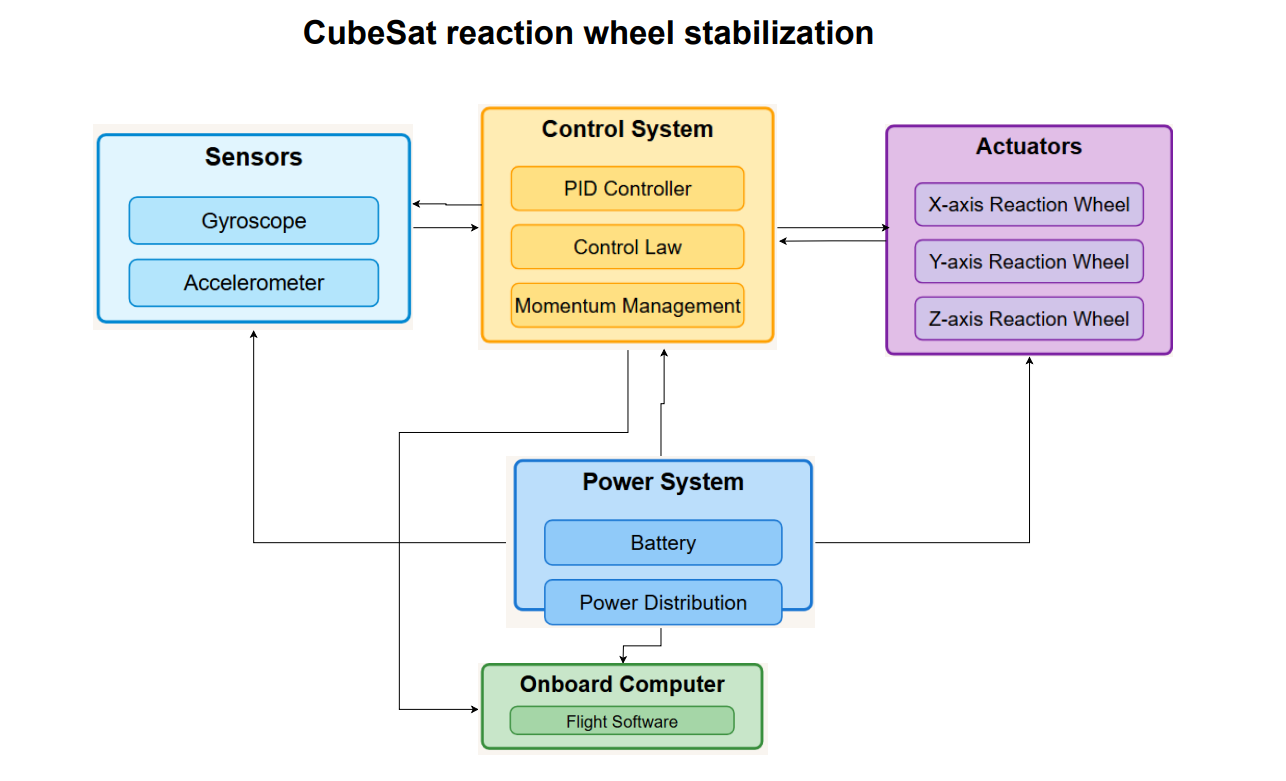
This project addresses the development and implementation of a pointing control system for nano satellites utilizing reaction wheel technology. As nanosatellites become increasingly prevalent in space missions, reliable attitude control systems that operate within tight constraints are essential. Our approach integrates orthogonally mounted reaction wheels with control algorithms to achieve stabilization and precise pointing capabilities.
Block Diagram
Future Work
This CubeSat can be established as a platform for integrating multiple sensors and fusing their data using a Kalman Filter, allowing the filter’s accuracy to be physically validated. Consequently, this provides an additional powerful tool alongside simulations.
GLORY
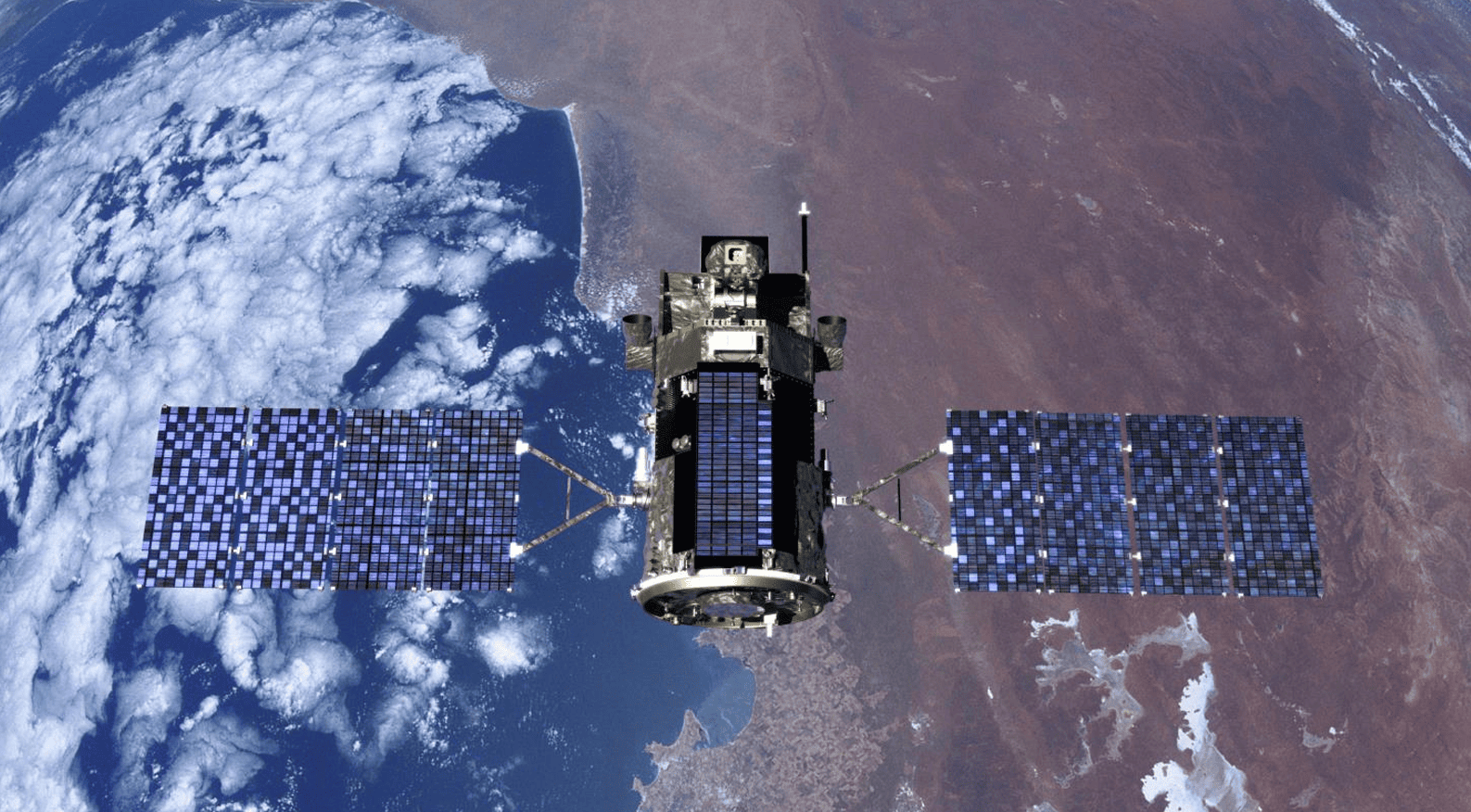
A full replica of the GLORY satellite
Project Overview
In this project, I built a model of the GLORY satellite, replicating its subsystems both externally and internally. I am very proud of this project, as it is now displayed in the office of Dr. Abrar H. Baluch, Director of the Space Engineering Program at KFUPM.
GLORY (by NASA)